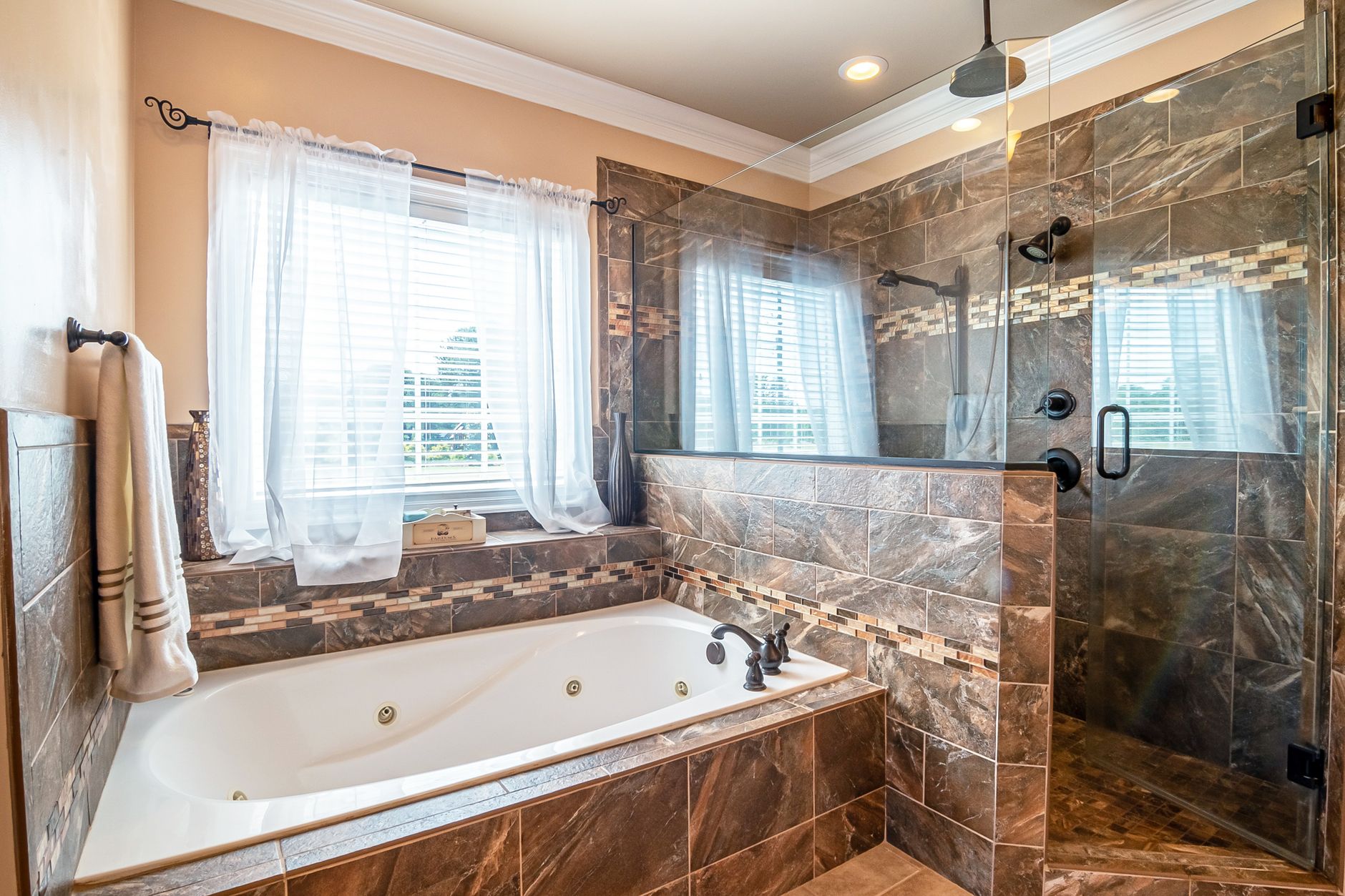
When upgrading a bathroom for aging in place, the choice between a walk-in shower and a walk-in tub is one of the most significant decisions you’ll face. Both address the core safety problem with standard bathtubs — the high step-over threshold — but they do so in very different ways, at very different price points, and with different tradeoffs. Here is an honest look at both options.
The Problem with Standard Bathtubs
A standard bathtub requires stepping over a 14-18 inch wall while wet, often in a slippery environment, while maintaining balance on one foot. For younger adults this is unremarkable. For seniors dealing with reduced balance, arthritis, or hip or knee problems, it is a significant fall risk. Both walk-in showers and walk-in tubs eliminate this step-over hazard — but that is where their similarities largely end.
Walk-In Showers
A walk-in shower has no threshold or a very low one (under 0.5 inches for a curbless design), meaning you walk straight in without stepping up or over anything. Combined with a fold-down seat, grab bars, a handheld showerhead, and a non-slip floor, a well-designed walk-in shower is among the safest bathing options available.
Advantages: No waiting to fill or drain — you shower and leave immediately. Curbless designs are the safest option for those with significant mobility limitations or wheelchair users. Lower cost than walk-in tubs. Easier to clean. Can be used by family members of any age. Works well for those who shower daily rather than bathe.
Disadvantages: No soaking capability — if you enjoy baths for pain relief, a shower won’t replace that. Some seniors miss the psychological comfort of a full bath. Requires adequate waterproofing design to prevent water from escaping into the bathroom.
Cost: A basic walk-in shower conversion runs $3,000-$7,000. A high-end curbless shower with premium tile, a built-in bench, and quality fixtures can reach $15,000-$25,000.
Walk-In Tubs
A walk-in tub has a door in the side of the tub that opens to allow entry without stepping over the tub wall. You step in, close the door, fill the tub, soak, drain, then exit. Walk-in tubs typically include built-in seats, grab bars, anti-slip floors, and often hydrotherapy jets.
Advantages: Full soaking bath capability — beneficial for arthritis, muscle pain, and the psychological pleasure of bathing. Hydrotherapy jets can provide genuine therapeutic benefit. Some users find the enclosed space reassuring.
Disadvantages: The critical drawback is the wet-exit problem: you must wait for the tub to drain completely before opening the door and stepping out. This means sitting in a cooling, possibly cold, bathtub for 10-15 minutes at the end of every bath. For seniors who already struggle with temperature regulation, this is a significant inconvenience and potential hypothermia risk. Higher cost than walk-in showers. Requires a water heater large enough to fill the tub (most walk-in tubs hold 50-80 gallons). Very heavy — floors must be assessed for structural adequacy.
Cost: Walk-in tubs range from $2,000-$5,000 for the unit alone, plus $1,500-$4,000 for installation, for a total of $3,500-$9,000. Heavily marketed “premium” models from TV advertisers often cost $10,000-$20,000 — prices not justified by the product.
Which Is Right for You?
For most seniors planning for long-term aging in place, a well-designed walk-in shower with a fold-down seat, grab bars, and a handheld showerhead is the better choice. It is safer (no wet-exit problem), less expensive, easier to use daily, and more practical as mobility needs change.
A walk-in tub makes sense if: you genuinely value soaking baths and will use the tub regularly, you have arthritis or muscle pain that responds well to hot water hydrotherapy, and you understand and can manage the wet-exit limitation.
Be cautious of aggressive walk-in tub marketing. The industry is notorious for high-pressure sales tactics, inflated pricing, and promises of health benefits that are not supported by evidence. If you are considering a walk-in tub, get multiple independent quotes and read consumer reviews carefully.
The Hybrid Option
Some manufacturers offer tub-shower hybrids — walk-in tubs that also function as showers, with a showerhead installed above the tub. This addresses the wet-exit problem by allowing users to shower off quickly after the tub drains. However, these units require a larger bathroom footprint and are more complex (and expensive) to install.