Exercise is the most evidence-based fall prevention intervention available. Multiple large-scale studies and systematic reviews confirm that exercise programs specifically designed for balance and lower-body strength can reduce falls by 23-34% in community-dwelling older adults. This guide provides a simple, safe daily routine you can do at home without equipment.
Why Exercise Prevents Falls
Aging causes predictable changes in the systems that keep us upright: reduced muscle mass and strength (particularly in the legs and core), slower reaction times, reduced proprioception (the body’s sense of its own position), and changes in the inner ear that affect balance. Exercise directly addresses all of these factors. Strength training rebuilds muscle; balance exercises train the neuromuscular system to respond more quickly to perturbations; and regular movement maintains joint mobility and proprioception.
Safety First
Before beginning this or any exercise routine, speak with your doctor — especially if you have recently had a fall, have heart disease, joint problems, or dizziness. During all standing exercises, have a sturdy chair or counter nearby to hold. If any exercise causes pain (beyond mild muscle fatigue), stop and consult your doctor or physical therapist.
The Routine: 15-20 Minutes Daily
Warm-Up (3 minutes)
Ankle circles: Seated in a chair, lift one foot slightly off the floor and rotate the ankle in circles, 10 times clockwise, 10 counterclockwise. Repeat with the other foot. This maintains ankle flexibility and proprioception.
Marching in place: Seated, lift alternate knees as if marching, 20 repetitions. This activates the hip flexors and gets blood moving.
Balance Exercises (8 minutes)
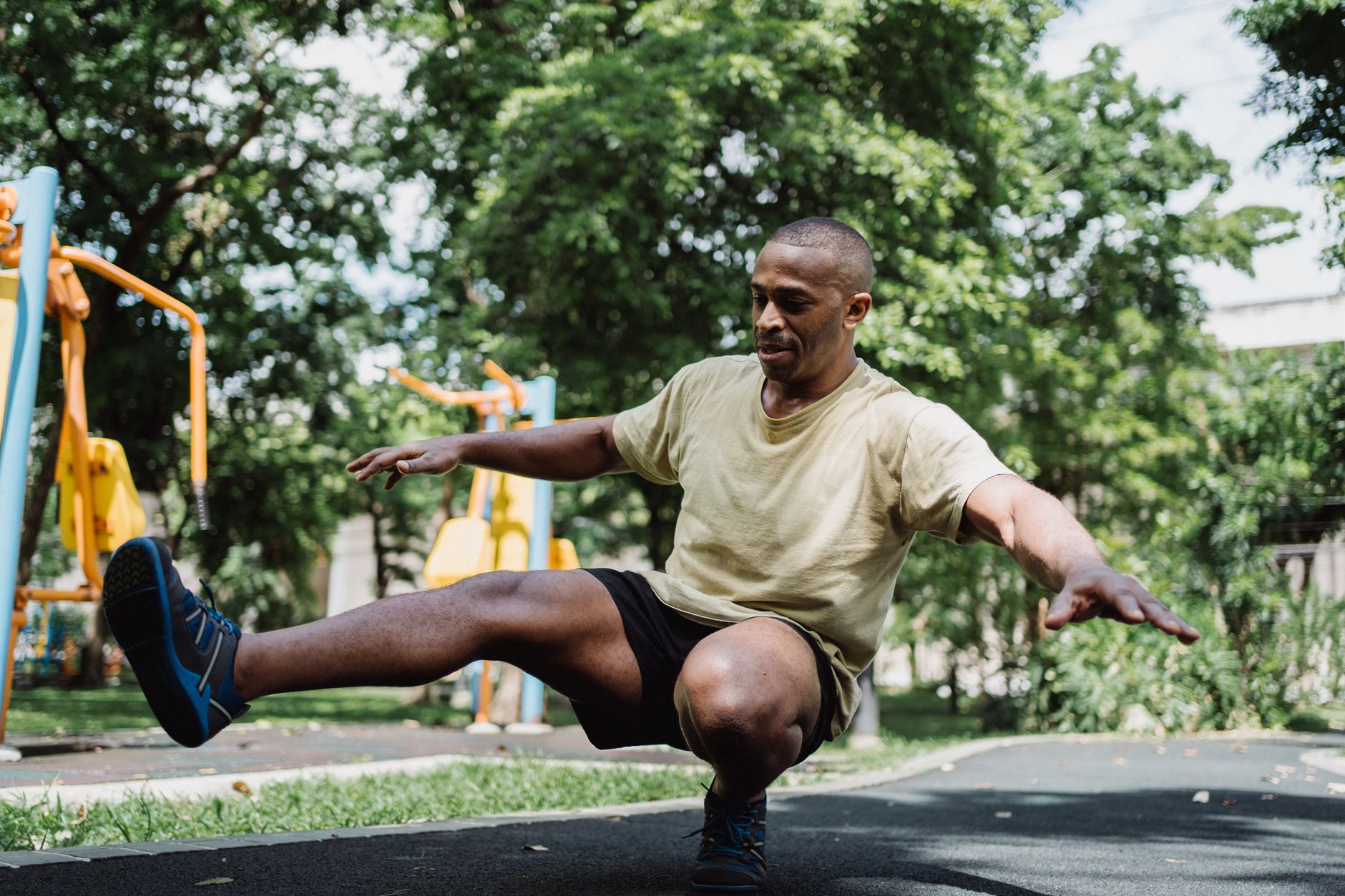
Single-leg stand: Stand behind a sturdy chair, holding the back lightly for support. Lift one foot slightly off the floor and hold for 10-30 seconds, keeping the standing leg slightly bent. Repeat on the other side. As this becomes easier, progress to holding the chair with one hand, then touching it with one finger, then not touching. Goal: 30 seconds each side without support. This is one of the most effective balance exercises available.
Heel-to-toe walking (tandem walk): Using a wall or counter for support if needed, walk forward placing one foot directly in front of the other, heel touching toe, for 10-20 steps. Then walk backward the same way. This trains the balance system for narrow-base walking situations.
Weight shifting: Stand with feet shoulder-width apart, hands resting lightly on a counter. Slowly shift your weight fully to the right foot, then back to center, then to the left. Hold each side position for 3-5 seconds. Repeat 10 times. Trains lateral balance recovery — the primary mechanism for catching yourself when you begin to fall sideways.
Strength Exercises (8 minutes)
Chair sit-to-stand: One of the most functional and important exercises for seniors. Sit in a chair with no armrests (or without using the armrests). Fold arms across chest. Slowly stand up, then slowly sit back down. Repeat 10-15 times. This directly trains the muscles used for the highest-fall-risk activities of daily life. If this is too difficult, push off from the armrests until strength improves.
Calf raises: Stand behind a chair, holding lightly for balance. Rise up on toes, hold for 2 seconds, lower slowly. Repeat 15-20 times. Strengthens calf muscles and improves ankle stability — critical for balance recovery.
Hip abduction: Stand behind a chair, holding for balance. Keeping the trunk upright, lift one leg out to the side, about 12 inches, hold for 2 seconds, lower. Repeat 10-15 times on each side. Strengthens hip abductors, which stabilize the pelvis during walking.
Step-ups: Using the bottom stair with a handrail for support, step up with one foot, bring the other foot up to the same step, then step back down. Repeat 10 times leading with each foot. Builds functional stair-climbing strength.
Progressing the Routine
When the routine starts to feel easy, progress by: increasing repetitions; adding small ankle weights (1-2 lbs) for leg exercises; performing balance exercises on a slightly unstable surface (folded towel); or reducing hand support during balance exercises. Progress gradually — the goal is consistent challenge without risk.
Group Programs
While this routine can be done alone at home, group exercise programs specifically designed for fall prevention — Otago, A Matter of Balance, Tai Chi for Arthritis — have strong evidence bases and offer social benefits. Ask your doctor about referrals, or search for programs through your local Area Agency on Aging.