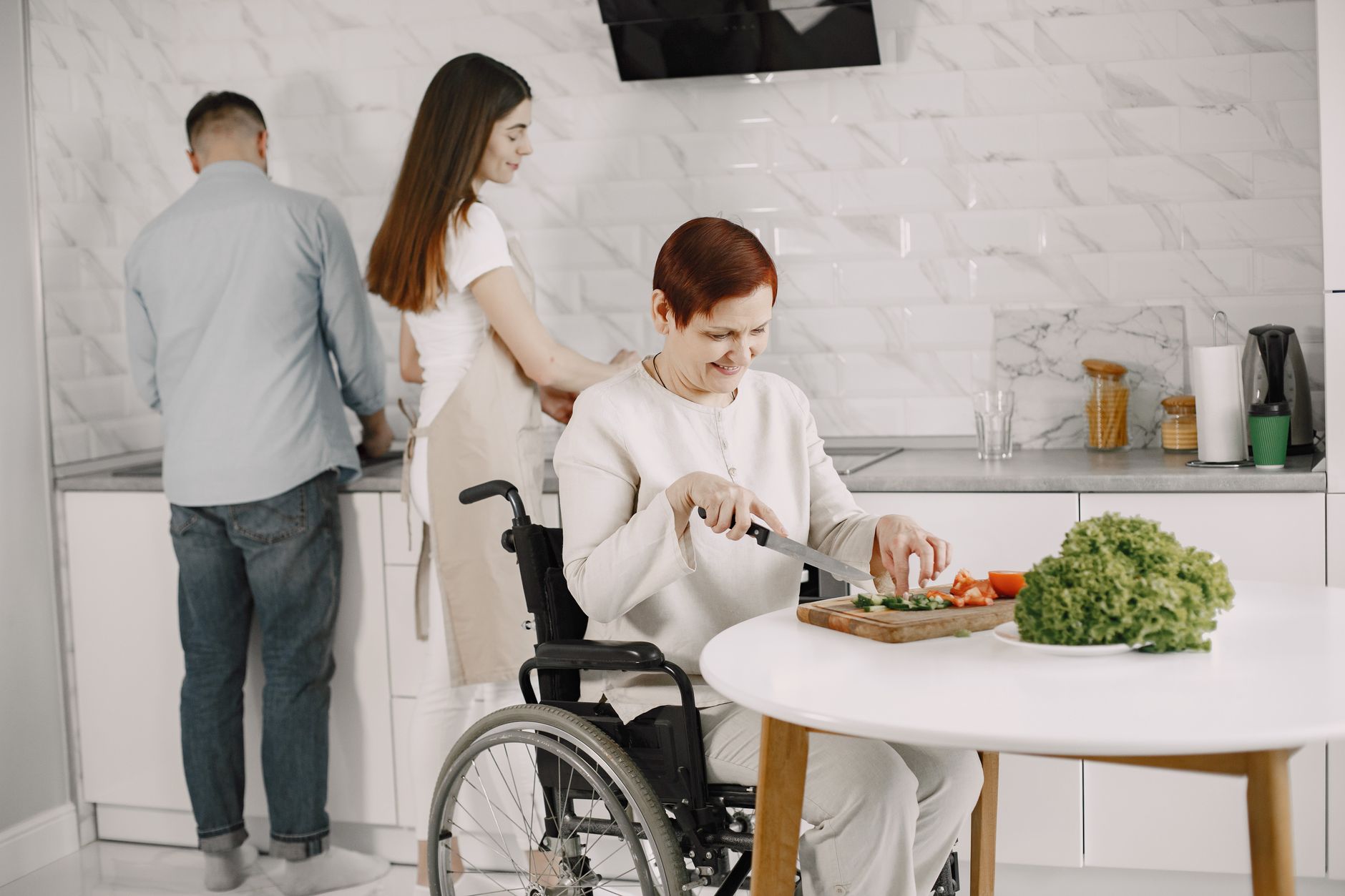
Universal design is the idea that homes, products, and environments should be usable by all people — regardless of age, size, or ability — without adaptation or specialized design. For aging in place, it offers a powerful framework: rather than retrofitting a home after a problem arises, universal design builds accessibility in from the start.
The Seven Principles of Universal Design
Developed at North Carolina State University, the seven principles of universal design provide a useful lens for evaluating any home feature or modification:
1. Equitable use: The design is useful to people with diverse abilities. A zero-step entrance benefits wheelchair users, parents with strollers, and anyone carrying heavy groceries.
2. Flexibility in use: The design accommodates a wide range of individual preferences and abilities. Adjustable-height countertops work for someone seated in a wheelchair or a child, as well as a standing adult.
3. Simple and intuitive use: Use of the design is easy to understand, regardless of the user’s experience, knowledge, language skills, or current concentration level. A lever faucet handle is more intuitive than a knob.
4. Perceptible information: The design communicates necessary information effectively to the user, regardless of ambient conditions or the user’s sensory abilities.
5. Tolerance for error: The design minimizes hazards and the adverse consequences of accidental or unintended actions. Rounded countertop edges reduce injury if someone falls against them.
6. Low physical effort: The design can be used efficiently and comfortably, with a minimum of fatigue. Lever door handles require less grip strength than round knobs.
7. Size and space for approach and use: Appropriate size and space is provided for approach, reach, manipulation, and use. Wide doorways accommodate wheelchairs; clear floor space beside toilets makes transfers easier.
Key Universal Design Features for the Home
Entrances
A truly universally designed home has at least one no-step entrance — a door at grade level, or reached by a gently sloping path, with no threshold to step over. The door itself should be at least 36 inches wide, with lever hardware. Covered entrances protect against weather and allow unhurried entry.
Doorways and Hallways
Interior doorways should be at least 32 inches clear width, ideally 36 inches. Hallways should be 36-48 inches wide. Offset hinges can add 2 inches to doorway clearance without structural work — a useful retrofit for existing homes.
Flooring
Smooth, level transitions between rooms are safer than thresholds. Hard flooring (hardwood, tile, vinyl) is easier to navigate with a walker or wheelchair than thick carpet, but should have a matte or textured finish to reduce glare and slipping. Where carpet is used, low-pile, firm-cushion carpet is best.
Kitchen
A universally designed kitchen features varied counter heights (some areas at 28-34 inches for seated work, others at standard 36 inches), pull-out shelves and drawers instead of deep cabinets, knee space under the sink and at least one counter area for wheelchair users, and controls on the front of appliances rather than the back.
Bathroom
The universally designed bathroom is one of the most impactful areas for aging in place. Key features include a curbless (roll-in) shower with a built-in bench, grab bars beside the toilet and in the shower, a wall-hung toilet or comfort-height toilet at 17-19 inches, a comfort-height vanity with knee space for wheelchair access, and lever faucets.
Lighting
Universal design calls for consistent, glare-free lighting throughout the home, with light switches at 42-48 inches height (lower than standard to be reachable from a seated position), and accessible electrical outlets at 18-48 inches.
Does Universal Design Look Institutional?
This is one of the most common concerns — and it is largely a myth. Modern universal design is indistinguishable from contemporary home design. Curbless showers are a luxury trend in new construction. Lever hardware appears in high-end designer fixtures. Wider doorways simply feel more open and airy.
The institutional look of older accessibility retrofits came from adding clearly afterthought features — clunky grab bars, obvious ramps — to homes not designed for them. Universal design, especially when planned into a home from the start or incorporated thoughtfully in a renovation, looks simply like a well-designed home.
When to Think About Universal Design
The ideal time to incorporate universal design is during new construction or a major renovation. Changes made at that stage cost a fraction of what retrofitting later requires. If you are remodeling a bathroom, for example, installing blocking in the walls for future grab bars costs almost nothing — while adding grab bars to a wall without blocking requires significant reconstruction.
Even if you are not renovating, many universal design principles can be applied incrementally. Start with the highest-impact, lowest-cost changes and work outward from there.