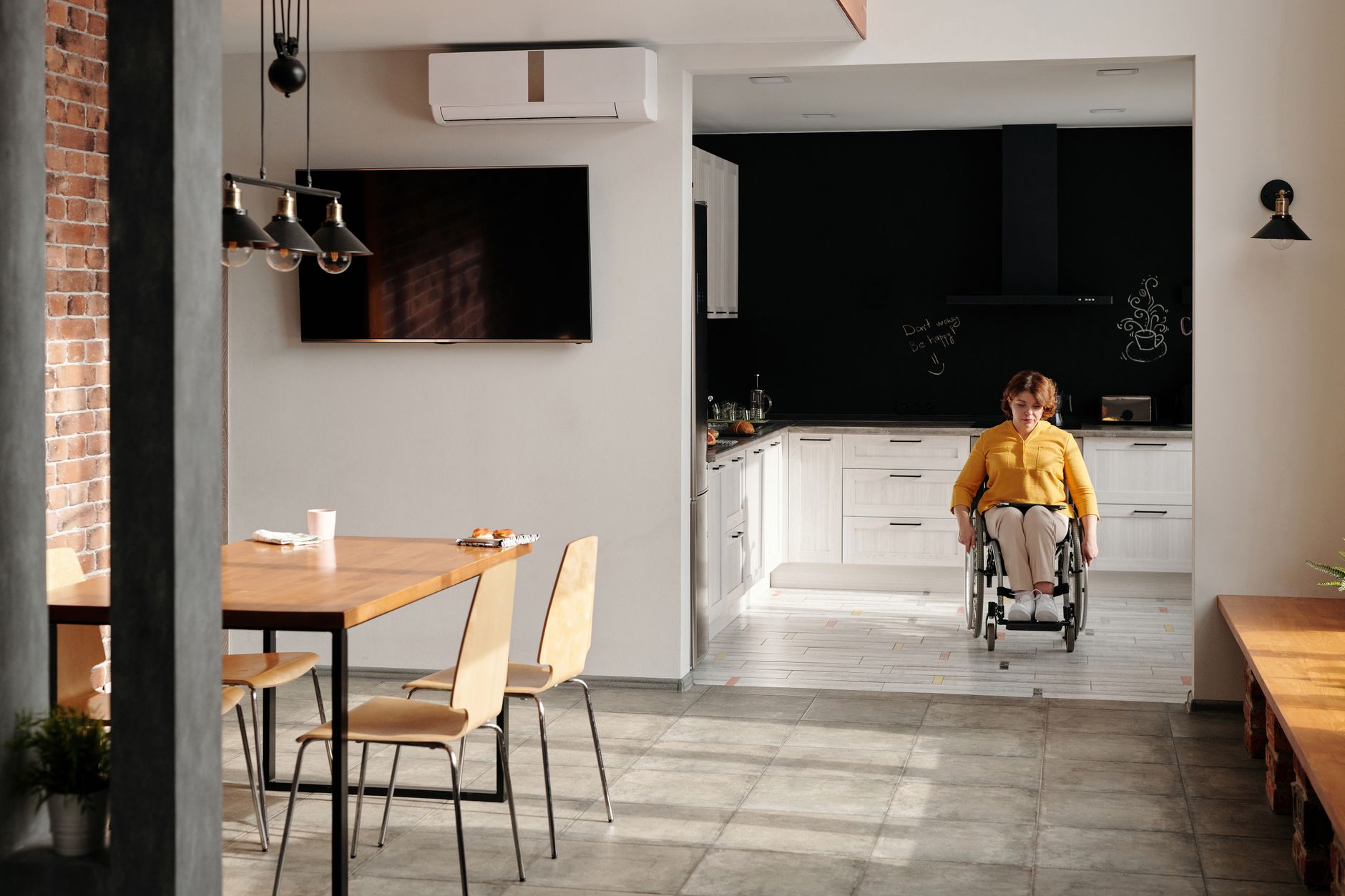
A wheelchair ramp removes one of the most significant barriers to independent living: the front door step. Whether you use a wheelchair, a walker, or simply find steps increasingly difficult, a well-designed ramp can make the difference between being able to leave and return to your home safely and needing assistance for every trip. Here is what you need to know before building or buying one.
Ramp Slope: The Most Important Specification
The slope of a ramp determines how easy it is to use. The standard for accessibility is a maximum slope of 1:12 — one inch of rise for every 12 inches of run. At this slope, most wheelchair users can propel themselves up the ramp independently, and walking with a cane or walker is comfortable.
For a home with a typical 6-inch step to the front door, a 1:12 ramp requires 6 feet of horizontal run — 72 inches. For a 24-inch rise (two steps), you need 24 feet of ramp. This is why ramp length is often a significant factor in planning.
Steeper slopes (1:8 or 1:6) may be acceptable for manual wheelchair users with assistance, but are not recommended for independent use or power wheelchairs without consultation with an accessibility specialist.
Ramp Width
ADA guidelines call for a minimum usable width of 36 inches (between handrails). For comfort, 42-48 inches is better. Standard power wheelchairs are 24-26 inches wide; adding 10-12 inches on each side for safe maneuvering requires a ramp of at least 44-48 inches total width.
Types of Home Ramps
Modular aluminum ramp systems: The most popular choice for home use. Pre-engineered modular sections bolt together to create a ramp of any length and configuration. They can navigate turns and landings, are easily disassembled if the home is sold, and require no building permits in most jurisdictions (check locally). Cost: $100-$200 per linear foot installed.
Wood ramps: Custom-built wood ramps can be designed to match a home’s architecture and are often less expensive for simple straight configurations. They require regular maintenance (sealing, checking for rot) and cannot be moved. Cost: $60-$150 per linear foot for materials; add labor if hiring a contractor.
Portable folding ramps: Aluminum channel ramps that fold for transport. Suitable for occasional use — loading into a vehicle, accessing a single step — but not appropriate as a permanent solution for a high-rise entry.
Threshold ramps: Small rubber or aluminum ramps for single low thresholds (1-3 inches). Inexpensive ($20-$80) and effective for small steps or door thresholds.
Handrails
Any ramp with a rise greater than 6 inches should have handrails on both sides. Handrails should be graspable (1.25-1.5 inches diameter for round rails), continuous from top to bottom of the ramp, extending 12 inches horizontally past the top and bottom of the ramp, and at a height of 34-38 inches measured from the ramp surface.
Surface
The ramp surface must be non-slip. Options include aluminum diamond plate (standard on most modular systems), abrasive strips applied to a wood surface, rubberized coating, or outdoor carpet. The surface must be firm, stable, and slip-resistant even when wet.
Permits and Codes
Many jurisdictions require a building permit for permanent ramp construction. Modular systems often qualify as temporary structures and may be exempt. Check with your local building department before construction. An accessibility contractor or CAPS professional can help navigate local requirements.
Getting Help with Costs
Ramp costs can be significant — a full-length modular aluminum ramp for a typical home entry runs $2,000-$6,000 installed. Financial assistance may be available through your state’s home modification grant programs, Area Agency on Aging, Veterans Administration (for veterans), Medicaid waiver programs, and volunteer organizations like Rebuilding Together, which provides free home modifications for low-income seniors.